Welcome to the Soccer Tavern, where we’re discussing the history, philosophy, and culture of the beautiful game. My name is Dave and in this video, we’re talking about the history of Sport-Club Freiburg, also known as SC Freiburg. Pull up a seat and let’s start the discussion.
SC Freiburg is located in the central part of the city of Freiburg. Freiburg is located on the very southwestern edge of Germany, close to the border with France & Switzerland. The club currently play in the Bundesliga and its home ground is called the Schwarzwald-Stadion, which opened in 1954 and holds about 24,000 people.
The club is moving to a new 34,700 seater stadium in 2020 in the northern, slightly western part of the city. It is experiencing some opposition from local residents and courts in regards to when games can be played. It’s something to continue following and we’ll link to articles with more info in the video description (you should definitely check them out).
Origin
SC Freiburg’s creation can be traced back to 2 clubs formed in 1904. The first club was created by a group of high school students and was named Freiburger Fußballverein 1904. In another part of the city of Freiburg, the club of Schwalbe was formed that same year.
Each of those clubs would go through some name changes before they merged in 1912 to become Sport Club Freiburg. The club would go through many mergers, name changes, and turmoil throughout the two World Wars before the club legally reformed as Sport-Club Freiburg in 1952. Shortly after the club was legally reformed, the soccer portion of the club formed a separate entity on June 27, 1952.
Nickname
Freiburg’s main nickname is the Breisgau-Brasilianer in German or the Brazilians of Breisgau in English. The city of Freiburg’s full name is Freiburg im Breisgau, so that’s where the Breisgau part of the nickname comes from. The other part of the nickname comes from the club’s attractive style of play in the 1990’s that people often associate with Brazilians.
Crest
The club has used the same crest since 1958.
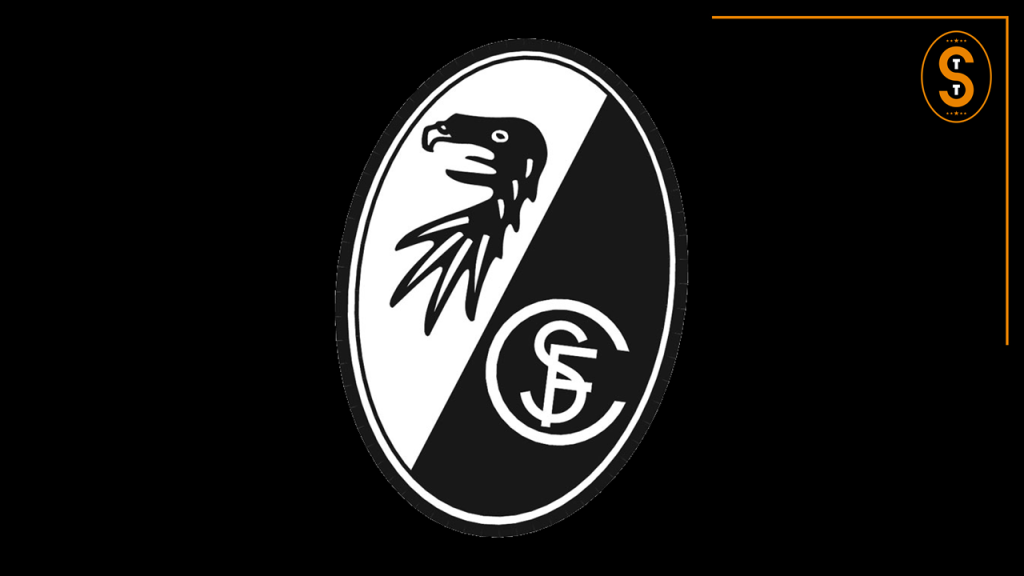
The bottom right portion of the crest is simply a stylized version of the letters S, C, & F for Sport-Club Freiburg. The top left portion of the crest is supposed to be the head of a griffin. A griffin is a mythical creature with its top half as an eagle and its bottom half a lion. You can see the griffin featured on the right side of Baden-Württemberg coat of arms. Baden-Württemberg is the state in Germany where Freiburg is located.
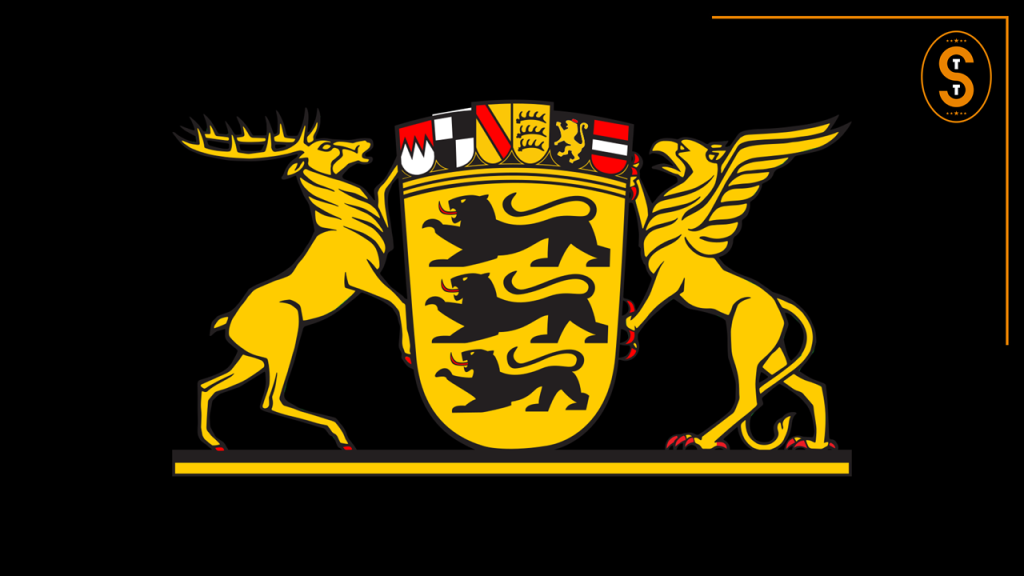
It also deserves mention here that the head on Freiburg’s crest doesn’t really look like the griffin on the Baden-Württemberg coat of arms, but instead looks exceptionally similar to the Ganter brewery logo. The Ganter brewery is based in the city of Freiburg.

I’ll let you decide for yourself what the inspiration for the animal in the upper left portion of the crest is.
Either way, it’s remarkable that the club has used this same crest since 1958.
Important Events
Likely the most important day in the club’s history was July 1, 1972 when Achim Stocker became club president after winning an election. At the time, the club was a small, amateur club and was not even the biggest club in Freiburg. Stocker went about professionalizing the club and attracting sponsors that were key to the club’s survival. Additionally, Stocker appointed Volker Finke as manager in 1991, which was instrumental in getting the club to where it is today. Stocker was president for 37 years and is likely the single most critical person in SC Freiburg’s history. The club’s new stadium will be on Achim-Stocker-Straße in his honor and it all started when he became president on July 1, 1972.
The next event I’d like to highlight came on May 25, 1993. On this date, SC Freiburg beat Hansa Rostock 1-0 in the 44th matchday of the 2. Bundesliga season. The result clinched automatic promotion to the Bundesliga for the first time in the club’s history. The entire season was incredibly impressive from Freiburg as the club was in first place from the 7th matchday through the 46th, which was the last day. It was an historic season for the club.
The club followed that historic season with an arguably just as memorable one in the 1994-1995 Bundesliga season. In the 2nd match of that season on August 23, 1994, Freiburg beat German powerhouse club Bayern Munich 5-1. It was one of the most impressive wins in the club’s history and worthy of calling out here. It was even more impressive as it wasn’t a one off fluke event that year with the club finishing in 3rd place in the Bundesliga that season. That is its highest ever league finish.
The 4th event I’d like to mention happened on September 12, 1995 when SC Freiburg hosted Slavia Prague in the first leg of the first round of the UEFA Cup. Though Freiburg lost the match 2-1, it was the club’s first ever match in a European competition. The club wouldn’t advance past the first round in this version of the tournament, but it is still an important date in the club’s history and worthy of mentioning here.
And the final event I’d like to discuss happened on February 26, 2013. Freiburg faced Mainz 05 in the DFB Pokal quarterfinals on this date. Freiburg trailed 2-0 late into the match, but goals in the 86th and 90th minutes forced extra time. Daniel Caligiuri scored the winning goal for Freiburg in the 109th minute of extra time to advance the club to its first ever DFB Pokal semifinal appearance. Freiburg fell 2-1 to Stuttgart in that semifinal match and this DFB Pokal run was the deepest the club has ever gone in that tournament, which is why I wanted to highlight it here.
Supporters
SC Freiburg’s anthem played before homes matches is called Badnerlied. It is a song that was first printed in the early 1900s and is about the pride of the former state of Baden, which is now a part of Baden-Württemberg. The city of Freiburg is located in this state and the song specifically highlights Freiburg as the place where wine is grown.
Noteworthy Players
I’d like to quickly highlight 7 players from the club’s history here.
First is Joachim Löw. Löw is now famous as the long-time German National Team manager, but he is Freiburg’s all-time leading goalscorer at time of recording. He played for the club over 3 different stints from 1978 to 1989 while it was in the 2. Bundesliga, making more than 250 appearances for the club.
The next player I’d like to mention is Andreas Zeyer, who played for the club from 1989 to 1997 and then again from 1999 until he retired in 2004. Zeyer is the club’s all-time record appearance holder and was a player for some of the club’s best moments.
Rodolfo Esteban Cardoso only played with Freiburg for 2 seasons, but he left a lasting impression. Cardoso was the first South American to ever play for the club and was a key attacking midfielder on the Freiburg side that finished 3rd in the Bundesliga in 1995.
Alexander Iashvili was a midfielder with Freiburg for 10 years from 1997 to 2007. Iashvili made close to 300 appearances for the club and has the most appearances of any non-German player in Freiburg’s history.
Soumaila Coulibaly joined the club in 2000 as a 22 year old. He’d experience a number of highs and lows with the club as it made a run in the UEFA Cup, suffered relegation, and then was promoted again. He would eventually become club captain in 2006 and is a cult hero at the club.
Matthias Ginter came through Freiburg’s youth academy and joined the first team in 2012. Ginter was only with Freiburg for 2 years, but he won the 2014 World Cup with Germany while he was still a Freiburg player. That makes Matthias Ginter the only player in Freiburg’s history to be a World Cup champion while a member of the club. He would join Dortmund shortly after coming back from the World Cup and currently plays for Borussia Mönchengladbach.
And lastly, I’d like to highlight Nils Petersen. Petersen was loaned to Freiburg in the winter of 2015 and joined the club permanently as it suffered relegation that season. Petersen was instrumental in leading the club back to the Bundesliga and he is currently Freiburg’s captain. He’s also very close to breaking Joachim Löw’s all-time club scoring record and Petersen is well on his way to legendary status at SC Freiburg.
Noteworthy Managers
I’d like to highlight 2 managers in this section.
First is Volker Finke who took over as manager in 1991 and led the club to the Bundesliga for the first time in 1993. He’d stay at the club for 16 years, leaving in 2007. Finke experienced a number of ups and downs with Freiburg including 3 promotions, 3 relegations, 2 trips to the UEFA Cup (now called the Europa League), and a 3rd place Bundesliga finish. He is the longest tenured manager in the club’s history and is an absolute club legend.
And the other manager I’d like to highlight is Christian Streich, who is the current club manager at time of recording. Streich is also the Bundesliga’s longest serving manager at time of recording as he’s been leading Freiburg since 2011. Prior to taking over as manager, Streich spent 16 years coaching in the club’s youth academy and being an assistant to the first team. He took over the team in 2011 while it was in last place in the Bundesliga and led them to a respectable 12th place finish. Streich has been a great leader for the club and Freiburg kept him as manager as it suffered relegation in 2015. The club was rewarded for its faith in Streich as it bounced straight back up to the Bundesliga and has remained in the league since then. Streich has already earned himself legendary status with the club and his status should continue to grow as he builds a legacy at Freiburg.
Rivals
Freiburg has 2 rivals: VfB Stuttgart & Karlsruher SC.
Freiburg’s rivalry with both of these clubs is not a full-blown rivalry, but rather a minor rivalry. Stuttgart and Karlsruher each consider the other one to be their main rival, so Freiburg is often the odd club out in this Baden-Württemberg rivalry triangle. Still Freiburg’s first ever Bundesliga match was a 4-0 victory in Stuttgart over VfB, which is fondly remembered by Freiburg supporters. Like I said, there isn’t much to these rivalries, but I did want to mention VfB Stuttgart & Karlsruher SC as Freiburg rivals.
Stats & Records
The stats and records we’re about to discuss are as of November 2019, which is when we are recording this video.
SC Freiburg has played 20 seasons in the top flight in its history.
The club has no major trophies, though the club has won the 2. Bundesliga (or 2nd division) title on 4 occasions.
Freiburg’s record first team appearance holder is Andreas Zeyer with 441 first team appearances.
The club’s record goal scorer is Joachim Löw with 83 first team goals though Nils Petersen is an active player and currently has 82 goals at time of recording. In all likelihood, he will break Löw’s record and continue to add to his tally in the future.
Freiburg’s record transfer purchase was Vincenzo Grifo from TSG Hoffenheim on September 2, 2019 for ~€7M.
And the club’s record transfer sale was Caglar Söyüncü to Leicester City FC in England on August 9, 2018 for ~€21.1M.
And 2 last interesting facts about the club:
(1) SC Freiburg has been relegated from the Bundesliga 4 times since first qualifying in 1993. The club has immediately gained promotion back to the Bundesliga after 1 season on 3 out of the 4 times. The only time the club didn’t immediately bounce back was after the relegation in 2005 when the club spent 4 seasons in the 2. Bundesliga.
(2) And lastly, since 1991, the club has only had 4 managers and only sacked 1 of those 4. Those are impressively small numbers, especially given how modern soccer discards managers relatively quickly.
So there you have it… a bit of history on Sport-Club Freiburg. Let’s continue the discussion in the comments section below the video.
Thanks for stopping by the Soccer Tavern. Hope to see you again soon. Prost!
 The Soccer Tavern